That is the latest viewpoint of the Ministry of Industry and Trade regarding renewable energy in a recent meeting.
Allowing solar power installation without following Power Plan 8
At the end of 2023, in the draft dossier for the Government’s decree regulating the mechanism for developing rooftop solar power (RTSP), the Ministry of Industry and Trade proposed that RTSP be linked to the national grid for self-use, and that the surplus output should not be sold to other organizations or individuals, including to Vietnam Electricity Group (EVN). If it is sent to the grid, the output will only be recorded at a price of 0 VND.
Recently, at a meeting reporting on the draft decree regulating the mechanism and policies to encourage the development of RTSP, Minister of Industry and Trade Nguyen Hong Dien changed his viewpoint and said that one of the important policies to encourage the development of RTSP sources is to allow these power sources to be linked and generate surplus capacity to the national grid at a price based on the time; Allowing the installation of solar power without following Power Plan 8; supporting interest rates when investing in electricity storage equipment.
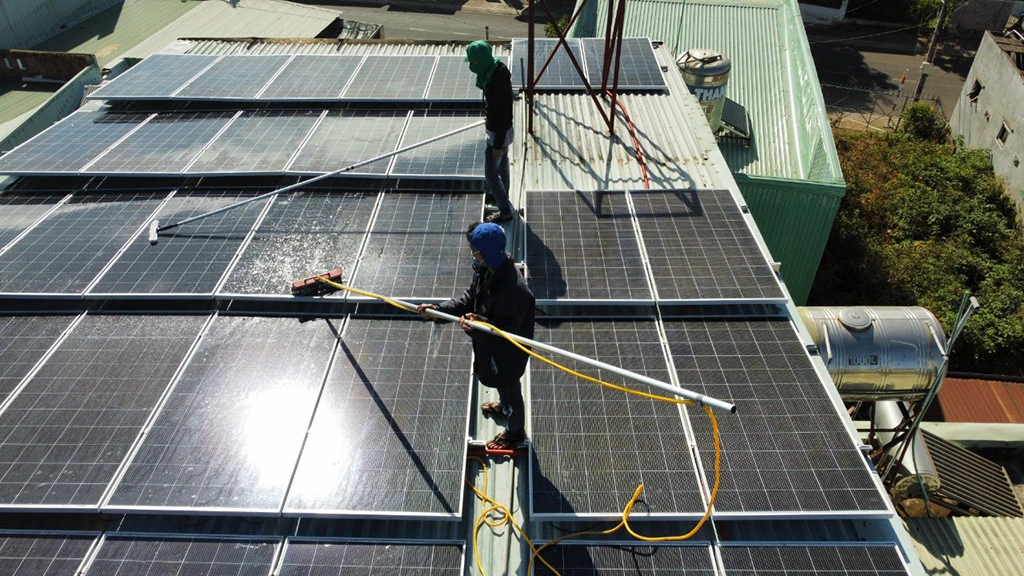
In particular, at the meeting, Deputy Prime Minister Tran Hong Ha also emphasized that the mechanism and policies to encourage organizations and individuals to invest in solar power are consistent policies. For example, for households, offices, office buildings… that install solar power for self-production and self-consumption, not for business purposes, standard documents must be developed and procedures must be simplified to the maximum, except for projects with special requirements on safety, fire prevention and fighting.
For businesses investing in renewable energy for use, and at the same time installing additional power storage equipment, it is necessary to offer reasonable prices, along with financial support plans, interest rates, taxes, etc. Deputy Prime Minister Tran Hong Ha noted: “It is necessary to carefully calculate the scale of renewable energy development and accompanying incentive and support policies based on science and technology, technological equipment, transmission grid, economic efficiency; protect the long-term interests of investors; focus on environmental protection”.
Energy expert Dao Nhat Dinh commented that the proposal to allow renewable energy to be connected to the grid and paid for, or even installed without following Power Plan 8 is completely new and “a bit strange”. This policy may add constraints on investment in storage batteries. Because in the current context, the solar power in the southern region has excess capacity during the day, consumed even on hot sunny days in the South, but at noon there is still a “dent” for 2 hours (from 11 am to 1 pm) due to the break time, production stops, and reduced electricity demand. Therefore, even if solar power is abundant during the day, coal-fired power still has to run in parallel during the day.
Energy expert Dao Nhat Dinh emphasized: “The binding tool for the policy to encourage the development of solar power according to the recent draft discussion between the Ministry of Industry and Trade and the Government, I understand, is to invest in storage batteries. If not used up during the day, it is stored in batteries for use at night, and sent to the grid. To do so, investors in solar power must install batteries with the cost of storage batteries being 2-3 times more expensive than the price of solar panels. That is the difficult problem. Therefore, in the proposal, the Ministry also clearly stated that it will support interest rates when investing in electricity storage equipment”.
Do not hesitate with the mechanism of “selling electricity to neighbors”
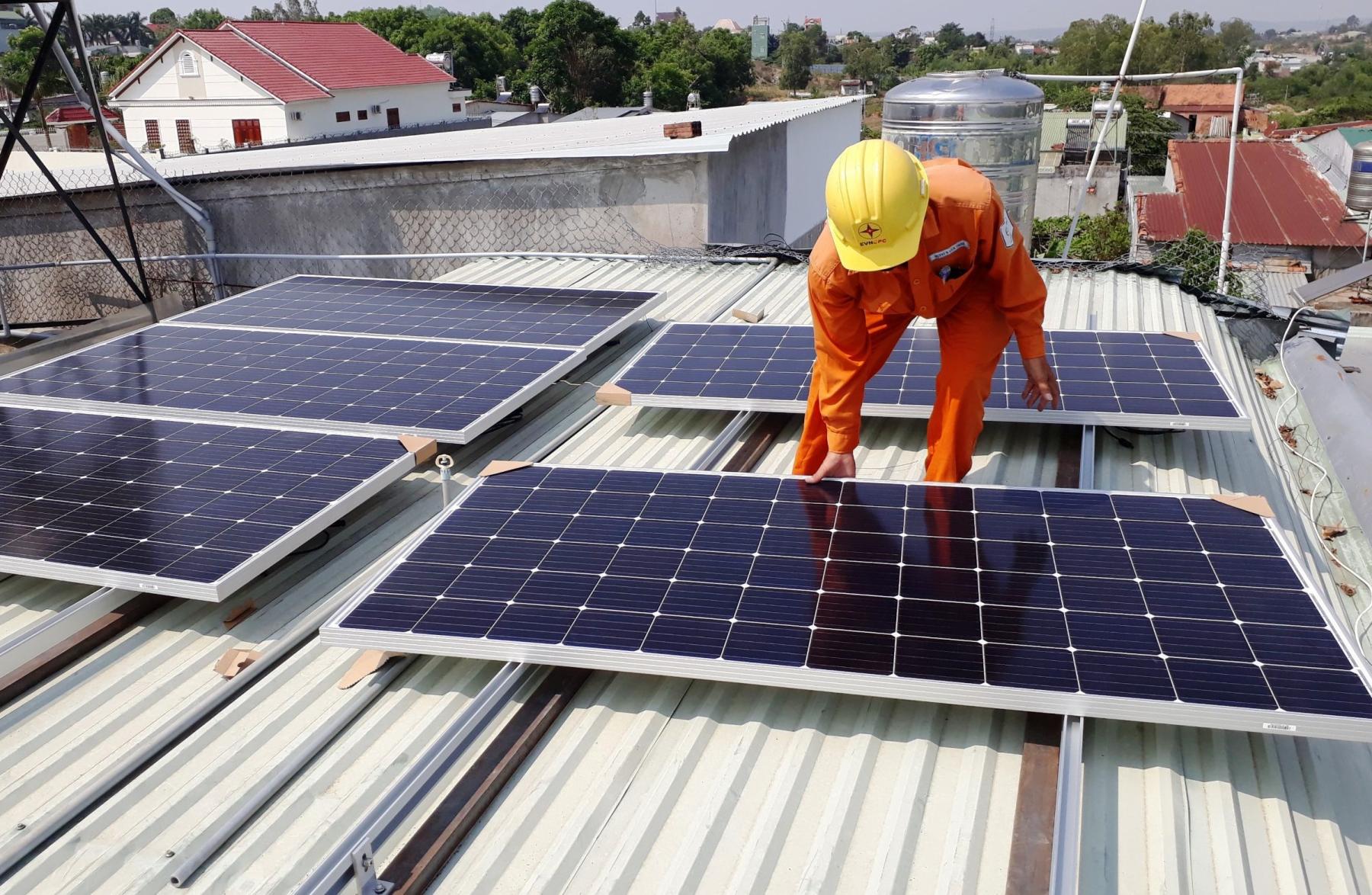
Dr. Tran Dinh Ba (Vietnam Economic Science Association) stated that whether or not to invest in additional storage batteries is the right of the electricity provider, so it is not “binding” on households who want to install solar power and sell it to neighbors via the national grid. Therefore, in the short term, freeing the private sector to install solar power and being able to generate and sell it to neighbors, to those who need it, will help increase household economy, solving the problem of electricity shortage. Moreover, the technical solution for grid-connected solar power is quite simple, not too complicated.
“The solution I proposed before was to open the door for people to build solar power, build an electricity bank to store electricity, and not let each person invest in solar power, which requires investing in additional battery storage equipment, which is very expensive. The policy of selling electricity to neighbors to the grid should have been in place a long time ago. After the FIT price policy expired, I think the management agency owes the people, investors and the Government a rooftop solar power price mechanism for too long,” said Mr. Ba.
In reality, the people’s demand for investment in solar power is very large, especially the investment mechanism to sell to neighbors that many countries have applied and are eagerly awaited domestically. For factories producing export goods, the need to use clean energy to be recognized as “green production” is almost a mandatory factor in exporting to some markets, so the need to invest in solar power is also extremely urgent.
The Ministry of Industry and Trade’s proposal for the first time to allow renewable energy projects to be built freely, beyond the planning… was assessed by energy expert Ngo Duc Lam, former Deputy Director of the Institute of Energy (Ministry of Industry and Trade), as a very welcome policy-releasing mindset. “Previously, the Ministry of Industry and Trade proposed that people invest in solar power in the form of self-production and self-consumption. If the surplus is fed into the grid, it will only be recorded as 0 VND, causing dissatisfaction and confusion among solar power investors. Therefore, this new proposal is a great progress for the management and operation. However, it will take a long time for this proposal to be included in the decree and then put into practice.
Meanwhile, the excess solar energy is not used, which is very wasteful. Therefore, in the immediate future, to prevent power shortages and avoid waste, it is necessary to allow electricity trading with neighbors, in industrial parks, etc. Solar power of households is connected to the grid and installed with a two-way meter. The trading between households in the area is fair through the meter. Previously, EVN did not encourage this because it was afraid of overloading and problems with the power lines. Now that the grid has been resolved, the Ministry of Industry and Trade has proposed this. There should be a concise mechanism and quick issuance to take advantage of available solar power sources as soon as possible, before the decree is issued. encourage development for future projects,” said Mr. Lam.
In the long term, according to expert Ngo Duc Lam, there needs to be a Renewable Energy Law so that investment and use of solar power can attract more private investors, and their rights are also protected and made clearer.